When protein starts breaking your product
Protein fortification rarely fails at the point of addition. The issues tend to show up later, once the system starts responding.
Texture shifts in ways that weren’t planned. Stability drifts over shelf life. Mouthfeel loses cohesion, sometimes becoming thin or slightly chalky after processing.
At that stage, protein is no longer just a nutritional input. It starts influencing how the system holds together.
Why whey protein does not behave as simply as expected
Whey protein is often introduced with the expectation that it will integrate cleanly, especially in familiar dairy systems.
That expectation can hold at modest inclusion levels. Once the protein content increases, behavior becomes more dependent on processing conditions and the surrounding matrix.
Under heat, shear, and pH variation, whey proteins can respond in ways that are difficult to predict without testing. Interactions with minerals, fat, and water distribution start to matter more.
Bovine whey remains widely used and generally reliable. In higher-protein formats, especially RTDs and shelf-stable products, some recurring challenges tend to appear:
- Texture can lose density as protein replaces other solids
- Thermal processing may introduce instability, particularly in UHT systems
- Additional stabilizers are often required to manage separation over time
Formulators usually compensate with gums, emulsifiers, or fat adjustments. That approach can work, although it often adds complexity rather than resolving the underlying behavior of the protein itself.
Reframing whey as part of the system
Goat whey protein concentrate is often easier to evaluate when treated as part of the system structure rather than a standalone protein source.
Alongside protein, it carries differences in composition that influence how the system behaves:
- Variation in protein fractions
- A distinct mineral profile
- Different hydration dynamics during mixing and shear
These factors affect how viscosity develops and how evenly proteins distribute through the matrix.
The outcome is not a single functional shift. It tends to show up as a change in how the system organizes itself under real processing conditions.
These effects are not consistent in every formulation. They become more noticeable as protein levels rise or when processing conditions are more demanding.
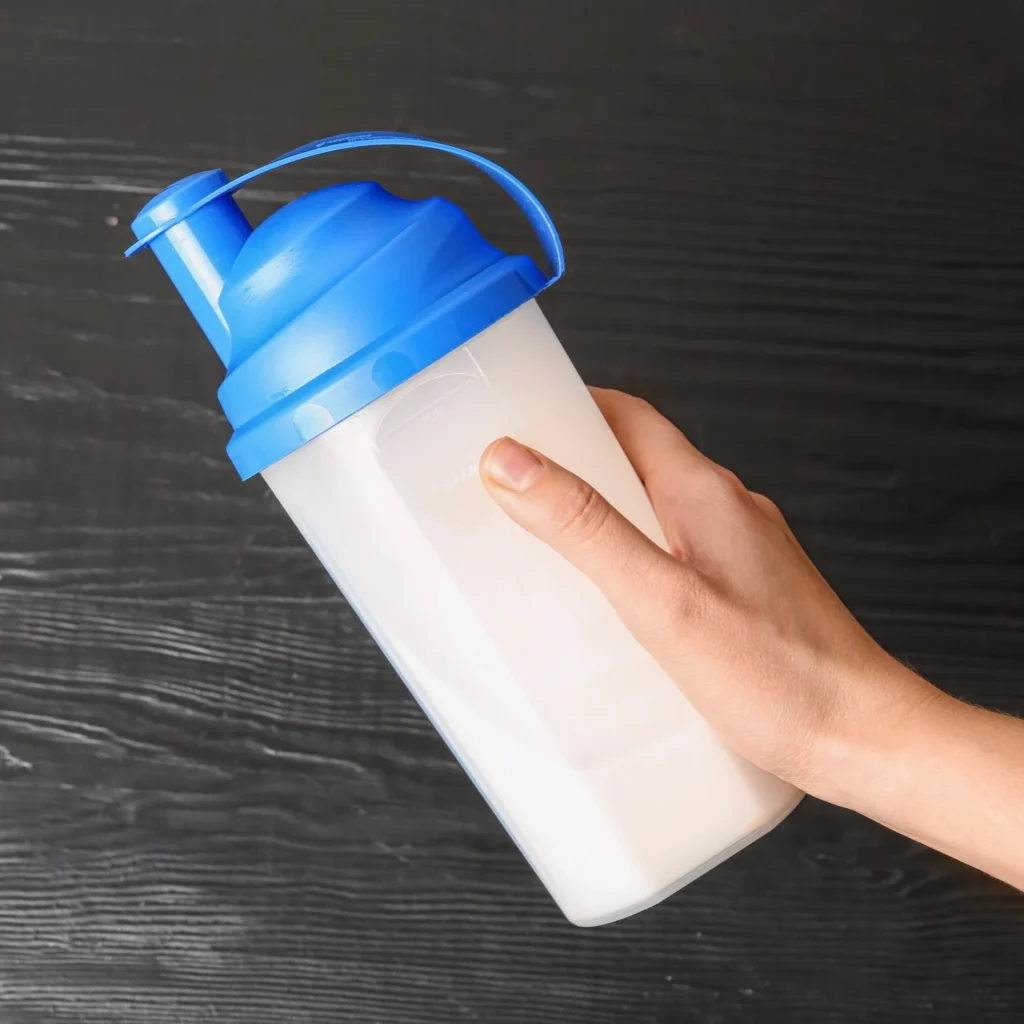
How goat whey protein can shift formulation trade-offs
Texture that holds together more easily
In high-protein systems, maintaining body without over-thickening is a recurring challenge.
Goat whey protein is often associated with a lighter mouthfeel that still retains some structure.
In application work, this can show up in a few ways:
- RTD beverages keep flow but don’t feel diluted
- Powder blends disperse with fewer dry or sandy notes
- Bars maintain softness without relying heavily on additional binders
This links back to hydration behavior and how water distributes across the system during mixing.
More predictable response during processing
Heat treatment and shelf stability tend to expose weaknesses in protein systems.
Changes in pH, ionic strength, and temperature can lead to aggregation or sedimentation over time.
Goat whey protein is sometimes described as more accommodating under these conditions, particularly in formulations with higher protein levels.
In practical terms, formulators may observe:
- Slower settling in liquid systems
- More stable suspension over shelf life
- Less change in viscosity after processing
Stabilizers are still part of the system. In some cases, the total requirement can be reduced or simplified.
Building protein without pushing the system too far
Higher protein targets often come with side effects. Viscosity increases, solubility becomes harder to manage, and flavor systems need more adjustment.
Goat whey protein concentrate can help ease some of that pressure by contributing soluble protein without accelerating thickening to the same extent.
When combined with goat MPC 60 or 80, it allows more control over how protein is distributed:
- Whey contributes solubility
- Casein supports structure
- Total solids can be balanced more precisely
This becomes particularly useful in formulations where both nutritional density and drinkability need to coexist.
Supporting positioning around comfort and repeat use
Digestibility remains a sensitive area and needs careful handling.
Goat milk proteins are commonly associated with a gentler experience by consumers. This is often linked to differences in casein composition and overall protein structure.
From a formulation standpoint, this matters less as a claim and more as a direction.
Products that feel lighter and less heavy tend to support repeat consumption more easily. This becomes relevant in categories where high protein can otherwise feel burdensome over time.
Ingredient choice and sourcing flexibility
Goat dairy is often discussed in relation to sustainability, although outcomes depend heavily on how and where production takes place.
Goats can be raised in a wider range of environments and are often part of smaller or mixed farming systems. That can support different sourcing strategies compared to conventional dairy supply chains.
It is more accurate to view goat whey as offering flexibility in sourcing rather than assuming a uniform environmental advantage.
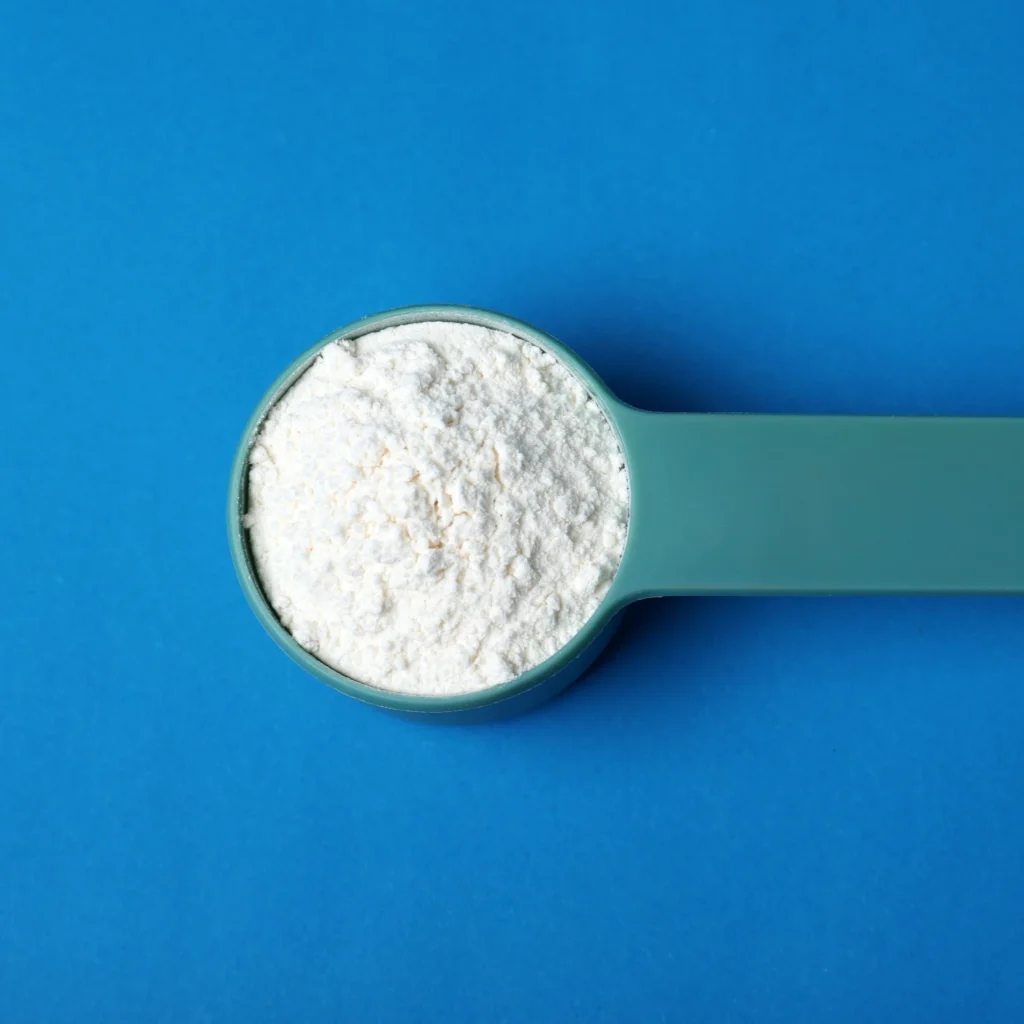
What this looks like in practice
In systems where bovine whey requires additional structuring, goat whey can change how that structure is achieved.
Across different applications, formulators often report:
- Less reliance on stabilizers in some beverage systems
- Improved dispersion in high-protein powders
- More consistent integration in blends that include MPC and milk powders
These outcomes depend on the full formulation and process. They are patterns seen in application work rather than guaranteed results.
Where goat whey does not solve the problem
Goat whey protein does not remove the need for standard formulation discipline.
Key variables still need to be managed carefully:
- Total solids and protein load
- Mineral balance and pH
- Processing conditions, including heat treatment and shear
There are also cases where bovine whey or blended systems remain the more practical choice, particularly when cost or existing infrastructure limits flexibility.
What changes is the set of constraints the formulator is working within.

Partner with The Milky Whey
At The Milky Whey, we supply spray-dried goat milk protein ingredients intended for use in real manufacturing conditions.
Our goat whey and MPC formats are:
- Produced from 100 percent goat milk
- Free from added carriers
- Supported by batch-level testing and documentation
For teams evaluating goat whey protein concentrate, the most useful next step is application testing within your own system.
Specifications, samples, and technical input can be provided to support that process and help determine where the ingredient fits.
To move forward, contact us to request a sample, discuss your formulation, or receive a quote.